BIOLOGY4ISC
  • HOME
  • ICSE 10
    • SYLLABUS
    • CONTENT >
      • Basic Biology >
        • 1. Cell division
        • 2. Genetics
      • Plant physiology >
        • 3. Osmosis and Ascent of sap
        • 4. Transpiration
        • 5. Photosynthesis
      • Human anatomy and physiology >
        • 6. Circulatory system
        • 7. Excretory system
        • 8. Nervous system and sense organs
        • 9. Endocrine system
        • 10. Reproductive system
      • Physical health and hygiene >
        • 11. Human population
        • 12. Aids to health and health organisation
    • PAPERS
  • ISC 11
    • SYLLABUS
    • CONTENT >
      • U-1 Diversity of life >
        • a. Biological classification >
          • Kingdom Monera
          • Kingdom Protista
          • Kingdom Fungi
        • c. Kingdom Plantae >
          • Thallophyta
          • Bryophyta
          • Pteridophyta
          • Gymnosperms
          • Angiosperms
        • d. Kingdom Animalia
      • U-2:Structural organisation in plants and animals >
        • b. Anatomy of flowering plants >
          • Basic idea of how secondary growth
          • Plant tissues
        • c. Structural organisation in animals >
          • Animal tissues
          • Connective tissue
          • Morphology and anatomy of cockroach
      • U-3. Cell structure and function >
        • a. Cell : unit of function >
          • cell organelles
          • nucleus
          • Cell membranes
        • b. Biomolecules >
          • Enzymes
        • c. Cell cycle and cell division >
          • MEIOSIS
      • U-4. Plant Physiology >
        • a. Plant transport >
          • Transpiration
        • b. Mineral nutrition
        • c. Photosynthesis
        • d. Cell respiration
        • e. Plant growth >
          • Plant hormones and photomorphogenesis
          • PLANT MOVEMENT
      • U-5. Human physiology >
        • a. Digestion and Absorption >
          • Physiology
          • disorders of digestive system
        • b. Respiratory system
        • c. Circulatory System >
          • Heart dissection
        • d. Excretory System >
          • Kidney dissection
        • e. Endocrine system >
          • Assignment
        • f. Nervous system >
          • Nervous system >
            • Eye
            • Ear
        • g. Locomotion
    • PRACTICAL >
      • Practical list and guidelines
      • Tools in Biology
      • PRACTICAL BOOKLET
    • SPECIMEN PAPERS
  • ISC 12
    • SYLLABUS
    • CONTENT >
      • U-1. REPRODUCTION >
        • Sexual reproduction in flowering plants >
          • Seeds and fruits
        • Human reproduction >
          • Human embryonic development
        • Reproductive health
      • U-2 .GENETICS AND EVOLUTION >
        • 1. Principles of inheritance and variation
        • 2.Molecular basis of inheritance >
          • 4. Gene expression
        • 1. Origin of life
        • 2. Evidences of evolution
        • 3. Theories of Evolution
        • 4. Human evolution
      • U-3 BIOLOGY AND HUMAN WELFARE >
        • 1. Human health and diseases >
          • Human diseases- causes and symptoms
        • 2. Enhancement in food production
      • U-4 BIOTECHNOLOGY AND ITS APPLICATIONS >
        • 1. rDNA technology
      • U-5 ECOLOGY AND ENVIRONMENT >
        • 13_Organism and environment
        • 1. Ecosystem
        • 2. Environmental Issues
    • PRACTICAL >
      • LIST AND INSTRUCTIONS
      • TAXONOMY
      • SLIDE PREPARATION
      • OBSERVATION >
        • PLANT ANATOMY
        • PLANT MORPHOLOGY
        • PLANT PHYSIOLOGY
        • ANIMAL ANATOMY
      • PLANT PHYSIOLOGY EXPERIMENTS
    • E BOOKS
    • PAPERS
  • GALLERY
    • 2007-10
    • 2010-12
    • 2011-13 >
      • 2013
      • PROJECT
      • Out of the classroom
      • BuddingBiologists
    • 2012-14 (class DPs) >
      • Photographs
      • Practical Based learning
      • PROJECT IDEA >
        • Project implementation
    • 2013-15 (class DPs) >
      • PROJECT
      • Photographs
    • 2014-16 >
      • Photographs
    • 2015-17
    • 2016-18
  • TRAINING
  • THE BIO PLACE

ISC-12>PRACTICAL>OBSERVATION>PLANT ANATOMY

Identification of permanent slide of plant anatomy-

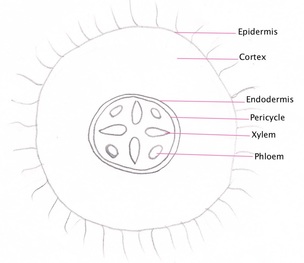
1. Slide showing transverse section of dicot root
Identifying features-
  • Unicellular hair are present on the epidermis.
  • Hypodermis is absent
  • Vascular bundles are radial. Xylem and phloem are present on separate radii.
  • Xylem and phloem bundles are less than 6.
  • Protoxylem lies towards periphery and metaxylem lies towards centre.
Picture

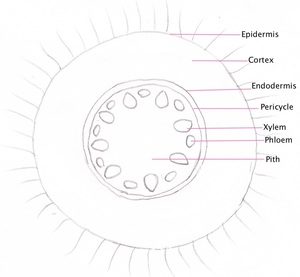
2. Slide showing transverse section of monocot root.
Identifying features-
  • Unicellular hairs are present on the epidermis.
  • Hypodermis is absent
  • Vascular bundles are radial. xylem and phloem are present on separate radii.
  • Xylem or phloem bundles are more than 5.
  • Metaxylem lies towards centre.
Picture

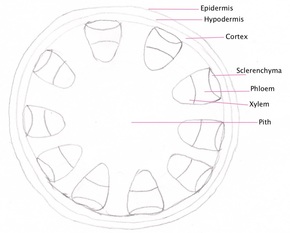
3. Slide showing transverse section of dicot stem.
Identifying features-
  • Multicellular hair present on the epidermis.
  • Hypodermis collenchmatous.
  • Xylem endarch (metaxylem towards periphery and protoxylem towards centre)
  • Vascular bundles are arranged in a ring.
  • Vascular bundles conjoint, collateral and open.( cambium present)
Picture

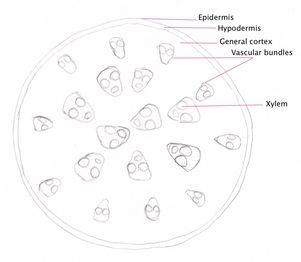
4. Slide showing transverse section of monocot stem.
Identifying features-
  • Hypodermis is sclerenchymatous.
  • Cortex is not differentiated into endodermis and pericycle.
  • Vascular bundles are scattered in the ground tissue.
  • Vascular bundles are conjoint,collateral and closed, I,e cambium is absent.
  • Each vascular bundle is surrounded by a bundle sheath.
  • Xylem is y-shaped and metaxylem lies towards periphery.
Picture

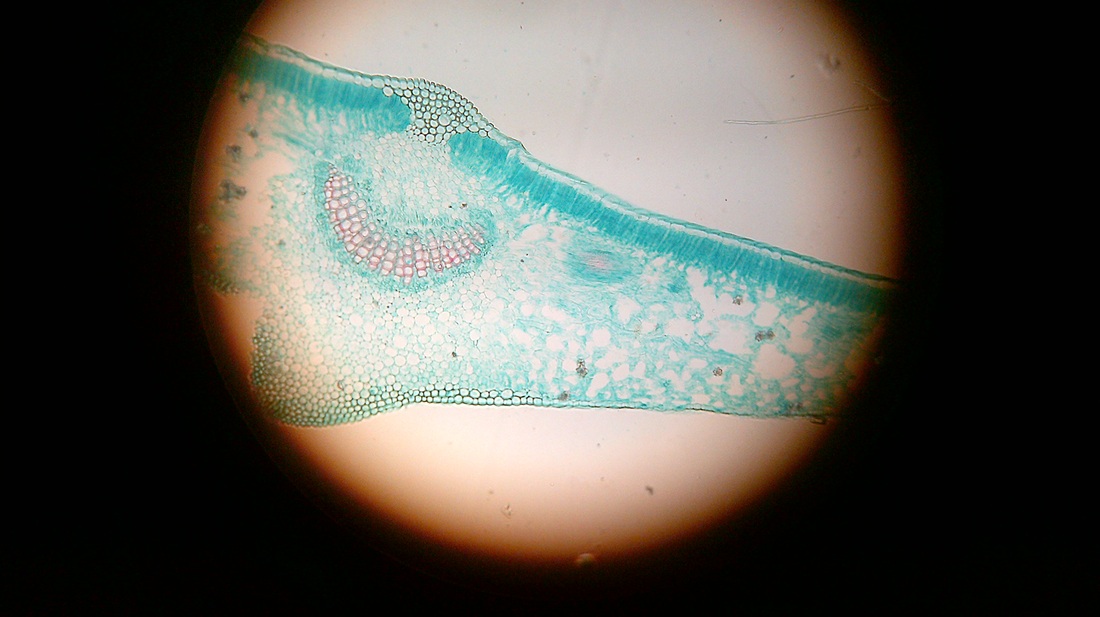
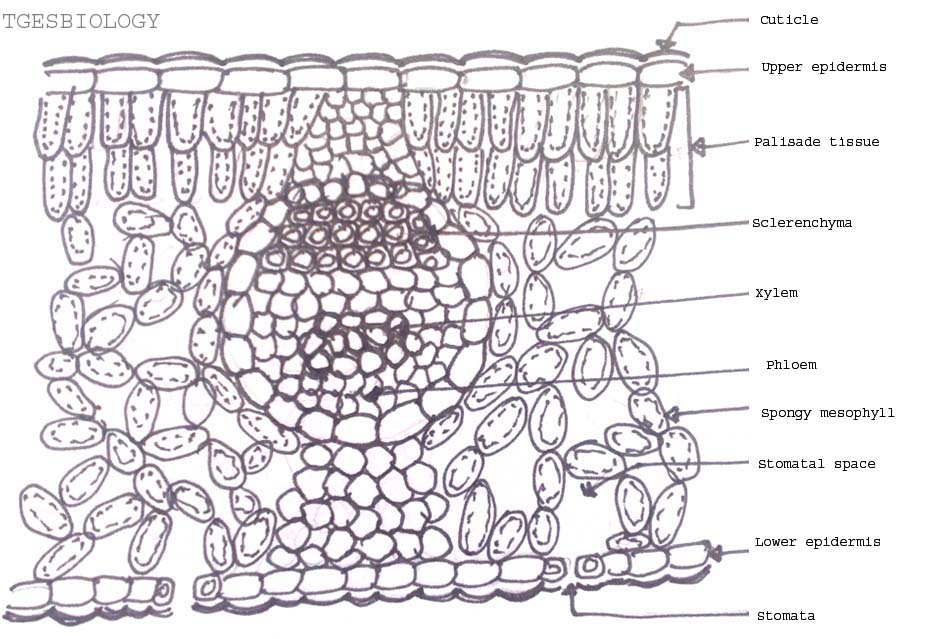
5. Slide showing transverse section of dicot leaf
Identifying features
  • Presence of upper and lower epidermis.
  • Stomata only on the lower epidermis.
  • Mesophyll cells well differentiated into palisade and spongy parenchyma
Picture
Picture
Section of dicot leaf as seen under microscope

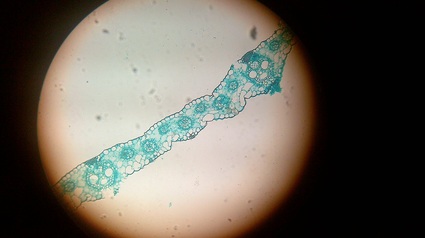
6. Slide showing transverse section of monocot leaf
identifying features
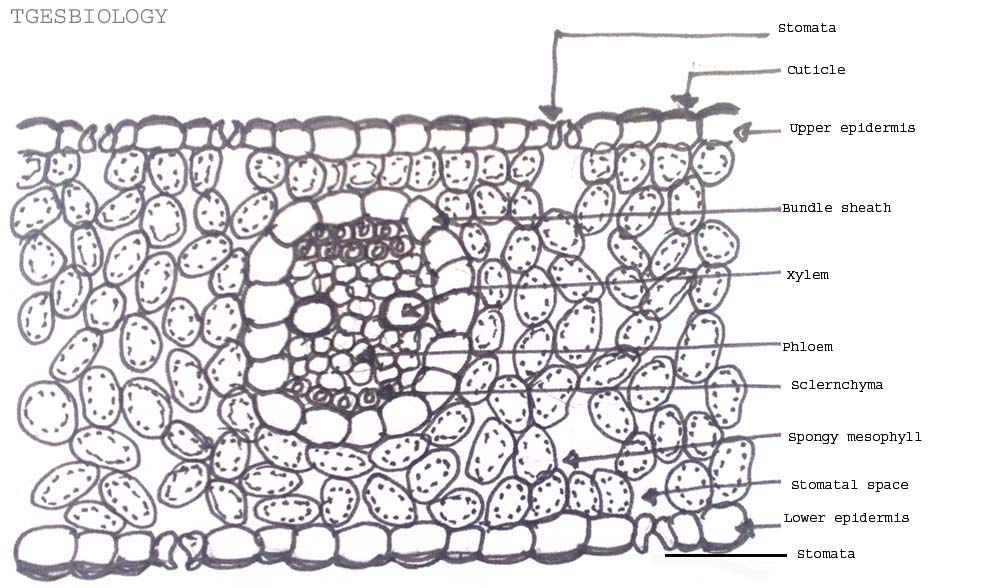
  • Presence of upper and lower epidermis.
  • Stomata are present on both the upper and lower epidermis.
  • Mesophyll cells are not differentiated into palisade and spongy parenchyma.
Picture
Picture
Section of monocot leaf as seen under microscope

GERMINATING POLLEN GRAIN

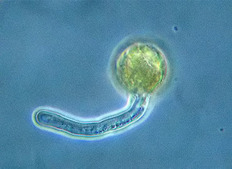
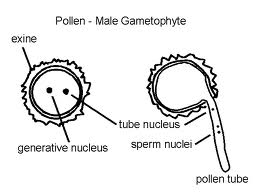
Slide showing germinating pollen grains.
Picture
(NOT TO BE WRITTEN IN THE JOURNAL)
Drawing points
  • (Rough) Exine visible
  • Germpore shown
  • Smooth intine extends as pollen tube
  • Two nuclei shown
Comment :
  • Pollen grain are seen with the pollen tubes.
  • Pollen tube carries the tube nucleus followed by male gametes.
  • Some of the pollen grains are non-viable as they are not germinating.
Reason :
  • Rough exine attached with germ pore
  • Pollen tube projecting out of a germ pore
  • 2 nuclei visible
  • Intine present
  • germ pore is present
Picture
Slide showing germinating pollen grain
Powered by Create your own unique website with customizable templates.