BIOLOGY4ISC
  • HOME
  • ICSE 10
    • SYLLABUS
    • CONTENT >
      • Basic Biology >
        • 1. Cell division
        • 2. Genetics
      • Plant physiology >
        • 3. Osmosis and Ascent of sap
        • 4. Transpiration
        • 5. Photosynthesis
      • Human anatomy and physiology >
        • 6. Circulatory system
        • 7. Excretory system
        • 8. Nervous system and sense organs
        • 9. Endocrine system
        • 10. Reproductive system
      • Physical health and hygiene >
        • 11. Human population
        • 12. Aids to health and health organisation
    • PAPERS
  • ISC 11
    • SYLLABUS
    • CONTENT >
      • U-1 Diversity of life >
        • a. Biological classification >
          • Kingdom Monera
          • Kingdom Protista
          • Kingdom Fungi
        • c. Kingdom Plantae >
          • Thallophyta
          • Bryophyta
          • Pteridophyta
          • Gymnosperms
          • Angiosperms
        • d. Kingdom Animalia
      • U-2:Structural organisation in plants and animals >
        • b. Anatomy of flowering plants >
          • Basic idea of how secondary growth
          • Plant tissues
        • c. Structural organisation in animals >
          • Animal tissues
          • Connective tissue
          • Morphology and anatomy of cockroach
      • U-3. Cell structure and function >
        • a. Cell : unit of function >
          • cell organelles
          • nucleus
          • Cell membranes
        • b. Biomolecules >
          • Enzymes
        • c. Cell cycle and cell division >
          • MEIOSIS
      • U-4. Plant Physiology >
        • a. Plant transport >
          • Transpiration
        • b. Mineral nutrition
        • c. Photosynthesis
        • d. Cell respiration
        • e. Plant growth >
          • Plant hormones and photomorphogenesis
          • PLANT MOVEMENT
      • U-5. Human physiology >
        • a. Digestion and Absorption >
          • Physiology
          • disorders of digestive system
        • b. Respiratory system
        • c. Circulatory System >
          • Heart dissection
        • d. Excretory System >
          • Kidney dissection
        • e. Endocrine system >
          • Assignment
        • f. Nervous system >
          • Nervous system >
            • Eye
            • Ear
        • g. Locomotion
    • PRACTICAL >
      • Practical list and guidelines
      • Tools in Biology
      • PRACTICAL BOOKLET
    • SPECIMEN PAPERS
  • ISC 12
    • SYLLABUS
    • CONTENT >
      • U-1. REPRODUCTION >
        • Sexual reproduction in flowering plants >
          • Seeds and fruits
        • Human reproduction >
          • Human embryonic development
        • Reproductive health
      • U-2 .GENETICS AND EVOLUTION >
        • 1. Principles of inheritance and variation
        • 2.Molecular basis of inheritance >
          • 4. Gene expression
        • 1. Origin of life
        • 2. Evidences of evolution
        • 3. Theories of Evolution
        • 4. Human evolution
      • U-3 BIOLOGY AND HUMAN WELFARE >
        • 1. Human health and diseases >
          • Human diseases- causes and symptoms
        • 2. Enhancement in food production
      • U-4 BIOTECHNOLOGY AND ITS APPLICATIONS >
        • 1. rDNA technology
      • U-5 ECOLOGY AND ENVIRONMENT >
        • 13_Organism and environment
        • 1. Ecosystem
        • 2. Environmental Issues
    • PRACTICAL >
      • LIST AND INSTRUCTIONS
      • TAXONOMY
      • SLIDE PREPARATION
      • OBSERVATION >
        • PLANT ANATOMY
        • PLANT MORPHOLOGY
        • PLANT PHYSIOLOGY
        • ANIMAL ANATOMY
      • PLANT PHYSIOLOGY EXPERIMENTS
    • E BOOKS
    • PAPERS
  • GALLERY
    • 2007-10
    • 2010-12
    • 2011-13 >
      • 2013
      • PROJECT
      • Out of the classroom
      • BuddingBiologists
    • 2012-14 (class DPs) >
      • Photographs
      • Practical Based learning
      • PROJECT IDEA >
        • Project implementation
    • 2013-15 (class DPs) >
      • PROJECT
      • Photographs
    • 2014-16 >
      • Photographs
    • 2015-17
    • 2016-18
  • TRAINING
  • THE BIO PLACE

ISC 12> 3. ORIGIN AND EVOLUTION OF LIFE> 4. HUMAN EVOLUTION

Scope of syllabus

Human evolution: Dryopithecus, Australopithecus, Homo erectus, Homo neanderthalensis, Cromagnon man and Homo sapiens; differences between apes and man.
evolution of man - brief idea of ancestors leading to man of today; comparison and homology in chromosomes of apes and man.
human_evolution.pdf
File Size: 1718 kb
File Type: pdf
Download File

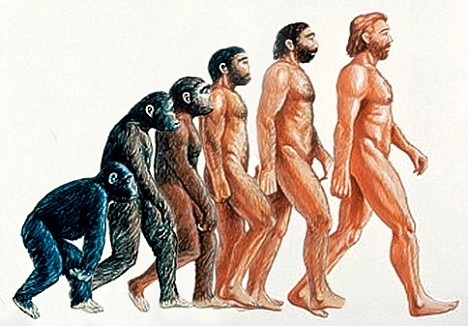
Did Humans Evolve?

The machinery behind evolution

First Human fossil evidence
Found in Java , Indonesia
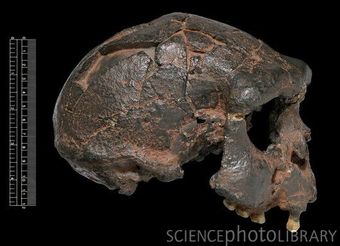
Homo erectus skull, Known as Java Man, this early human species was identified based on fossil evidence first found in 1891 in archaeological sites along the Solo River, East Java, Indonesia. 
This specimen is the Sangiran 17 skull, found in 1969 in the Sangiran Cave, Central Java. 
It has been dated to between 1.3 and 1 million years ago, though estimates vary. 
Picture

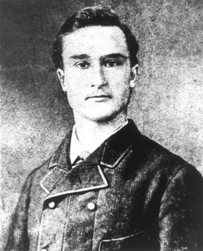
Eugene Dubois (1858-1940)

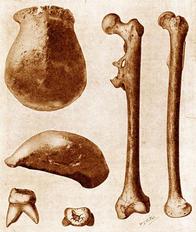
•In September 1890, his workers found a human, or human-like, fossil at Koedoeng Broeboes. This consisted of the right side of the chin of a lower jaw and three attached teeth. 
•In August 1891 he found a primate molar tooth. Two months later and one meter away was found an intact skullcap, the fossil which would be known as Java Man. 
•In August 1892, a third primate fossil, an almost complete left thigh bone, was found between 10 and 15 meters away from the skullcap
Picture
Picture

Human evolution- when and where.

Picture
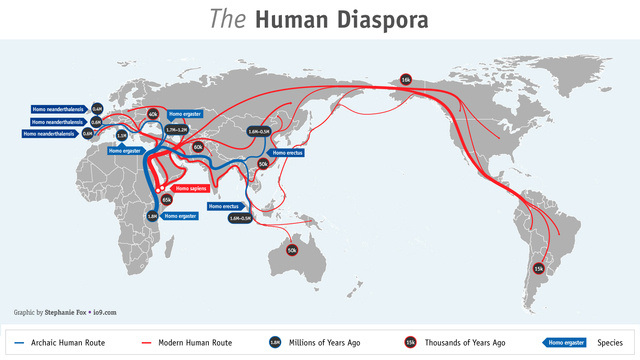
About 3.8 mya, in Africa and then diversified to all parts of the world

Factors responsible for human evolution

•Increased aridity of climate. 
•Dwindling of forests and replacement by grasslands 
•Reduction in number of trees.

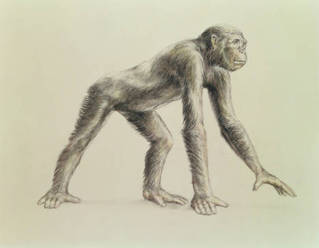
CHARACTERS THAT DIFFERENTIATE HUMANS AND APES

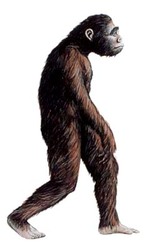
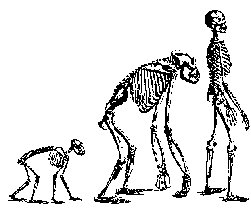
1. Erect posture
Picture
Picture

2. Bipedalism

Picture

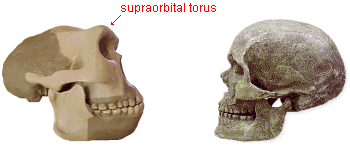
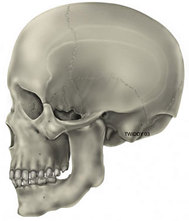
3. Supraorbital ridge reduction

Picture

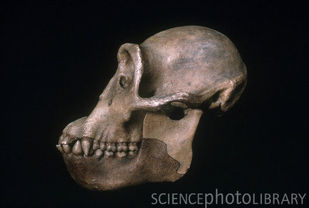
4. Prognathous to orthognathous

Picture
Picture

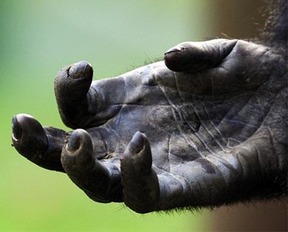
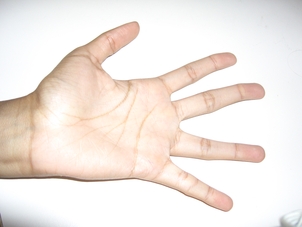
5. Opposable thumb

Picture
Picture

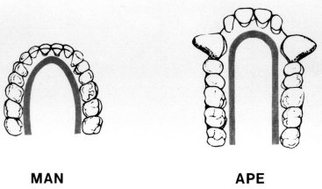
6. Shape of jaw

Picture

Other characters

  • Development of distinct lumbar curve.
  • Development of broad pelvic bones
  • Acetabular cavities shifted inside, hind limbs to support body weight.
  • Increase in size of cranial cavity
  • Flattening of face
  • Straightening of forehead
  • Narrowing of nose
  • Thinning of jaw bones
  • Reduction in jaw musculature 
  • Reduction in size of cannines
  • Loss of tail
  • Articulated speech
Picture

HUMAN ANCESTORS

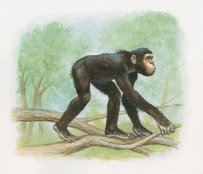
Dryopithecus

The fossils were discovered from rocks of Miocene age(20 mya).
These resembled the great apes. Their arms and legs were of equal length.
They had semi-erect posture, large canines, and without brow ridges.
Picture

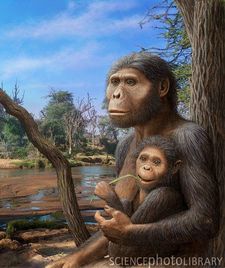
Australopithecus (African ape man)

Two million years ago fossil baby skull called Tuang baby was discovered by Raymond Dart and named it (Australopithecus africanus). 
Australopithecus were about 150cm and its skull was like that was like that of modern apes with cranial capacity of 600cc. They lived during Pliocene and the Pleistocene in Africa.
Another species of Australopithecus fossil “Lucy” was discovered by Donald Johanson in 1976.
Simian characters:
  1. Small in size, average height- 4feet
  2. Face prognathous.
  3. Chin absent, forehead low.
  4. Bulge of occipital region small.
  5. Eyebrow ridges projected over the eyes.
  6. Cranial capacity about 600 cc
Human characters:
  1. Walked completely straight
  2. Vertebral column with distinct lumbar curve
  3. Pelvis broad and basin like.
  4. Teeth man-like with dental arch in the form of parabola.
  5. Simian gap between incisors and canine absent.
  6. Canines man-like and did not project beyond the level of other teeth.
Picture
Finding "Lucy"

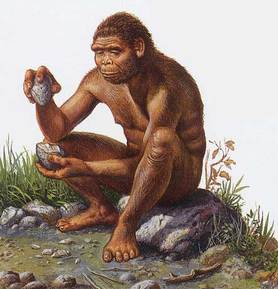
Advanced Australopithecus - Homo habilis

The fossils of Homo habilis or the handy man was discovered by Louis Leakey in 1960. 
These were found in rocks 1.6 to 1.8 million years old in east Africa.
They were slightly more advanced than Australopithecus.
Characters-
  • They  were 120 -150cm tall.
  • They had cranial capacity of 730cc. 
  • They had human like body with an ape like head. 
  • They walked erect with bipedal gait.  
They lived in caves were herbivores and used tools of stones to dig out tubers and led community life. 
They are regarded as the last of the Australopithecus.
They originated about 3.5 million years ago.
Picture

Homo erectus erectus (Java ape man)

The fossil was discovered by Eugene Dubois, in 1891. Dubois named the fossils as Pithecanthropus erectus or Java ape man. later it was renamed as Homo erectus by Mayer (1950) .They lived 1.7million years ago (Pleistocene) on the banks of Solo river in Java. 
Characters-
  • They stood upright to  a height of 150cms. 
  • They had receding forehead with prominent brow ridges 
  • The jaws were prognathous without a distinct chin.
  • The cranial capacity was 900cc. 
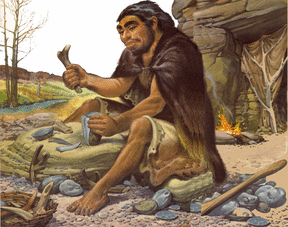
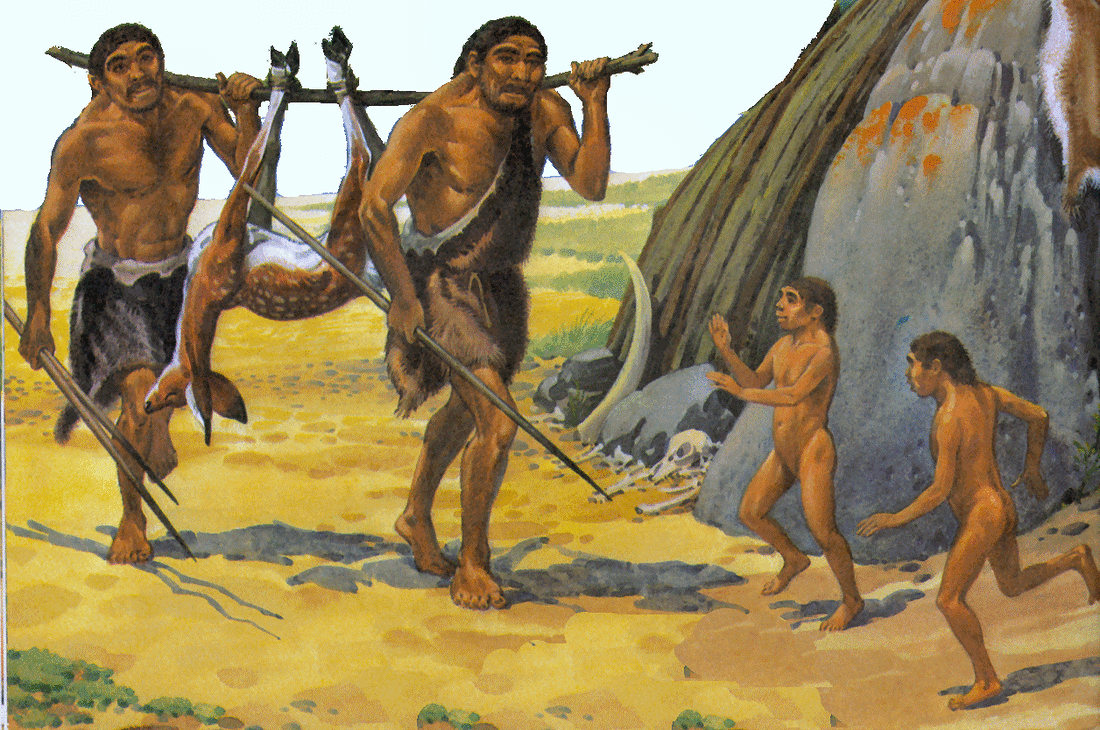
They were hunters and food gatherers, used stone tools for hunting, lived in caves, learned the use of fire for cooking and used animal skin for clothing themselves and probably used sign language.
Picture

Homo sapiens neanderthalensis (Neanderthal man) 

Fossil was discovered by C. Fuhirott in 1856.
They arose about 1,00,000 years ago and became extinct 25,000 years ago. 
Characters-
  • Thick skull bones. 
  • Low slanting forehead.
  • Strong lower jaw muscles and no chin. 
  • Short of stature 1.5 to 1.6m height.
  • Semi erect stooping posture.
  • Cranial capacity of 1450cc.
They used flint tools and animal skin for clothing. They buried the dead and performed ceremonies and constructed dwelling structures.
Neanderthal-cannibalism.html 
Picture
Read more-
neandertal man

Homo sapiens fossilis (Early modern man or Cro-magnon man) 

Fossil was discovered by Mac Gregor in 1868 from the caves of north west Italy.
They originated 50,000 years ago and existed for about 30,000 years. They became extinct 10-20 thousand years ago. 
Characters-
  • They were about 1.8m tall.
  • They had perfect posture.
  • The cranial capacity was 1660 cc.
  • They are prominent chin and narrow elevated nose.
  • Face was prognathous.
They were cave dwellers and hunters, they buried the dead and could make paint. They learnt to shape stones and bones into excellent tools. They had religious beliefs and burial customs. They developed the paleolithic culture.
Picture

Homo sapiens sapiens (Modern man)

It is the living modern man, evolved 25 thousand years ago. 
Their evolution includes cultural evolution rather than anatomical evolution. He learned to cultivate plants and domesticate animals. Modern man is associated with neolithic culture. They settled down near lakes and ocean shores to catch fishes, and also started domesticating plants and animals.
The modern man is known to have appeared around the Caspian sea and evolved into following races-
Negroid- Africa and Malaysia.
Caucasian- Europe and North America.
Mongoloids- China, Siberia and Japan.

Picture

Cultural evolution in man

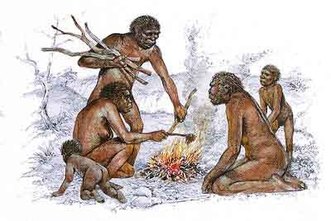
Cultural evolution started in the Pleistocene period with the early human ancestors leading a community life.
They lived in caves to protect themselves from the predators.
They started using tools for digging tubers etc. for food. They then started making tools for hunting animals.
As evolution took place in the late Pleistocene, the used fire for defense and cooking.
These early humans also used sign language for communication.
The tools were more sophisticated and animal skin used for clothing.
They followed religious customs and burial patterns.
Cro-Magnon man knew the art of painting and sketching.
Modern man showed more of cultural evolution than anatomical evolution. For improved hunting, good tools were produced, later domestication of plants and animals led to the agricultural revolution and finally the latest industrial and scientific revolution.
Picture

Other evidences in support of common ancestors

1.Anatomical: These include the various morphological similarities posture, teeth, locomotion etc. Vestigial organs present in humans are also present in apes.
2.Physiological : blood groups, menstrual cycle in female (no. of days same), gestation period (270-90 humans,265-80 –gorilla and 210-52 chimpanzee) 3.Embryological: eggs and sperms are similar, mammae in six week old human embryo, hairs on the embryos

    Assignment submission for Human ancestors

    Max file size: 20MB
Submit
bqhumanevolution.doc
File Size: 36 kb
File Type: doc
Download File

Powered by Create your own unique website with customizable templates.